|
|
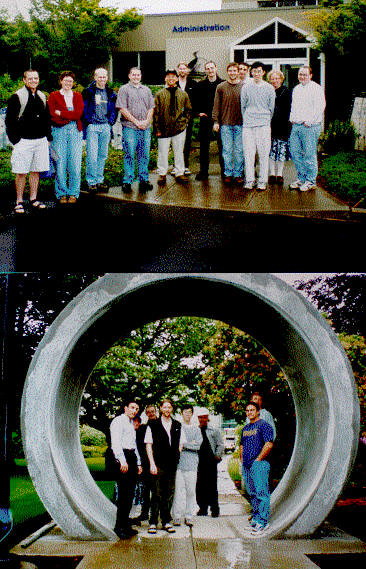
CE 474/574 Student Tour Group Top: In front of Columbia River WastewaterTreatment Plant adminsitration building. Bottom: Inside a sample section of the "Big Pipe" being installed to collect and prevent stormwater overflows. |
|
|
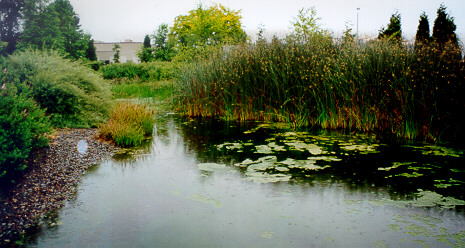
Stormwater Treatment Wetlands Experimental wetlands to improve the quality of stormwater. |

|
|
Overview of Inlet Area Circular tank is inlet grit removal, with odor control system to the left. Old primary clarifiers are in the back of the scene. |
|
|
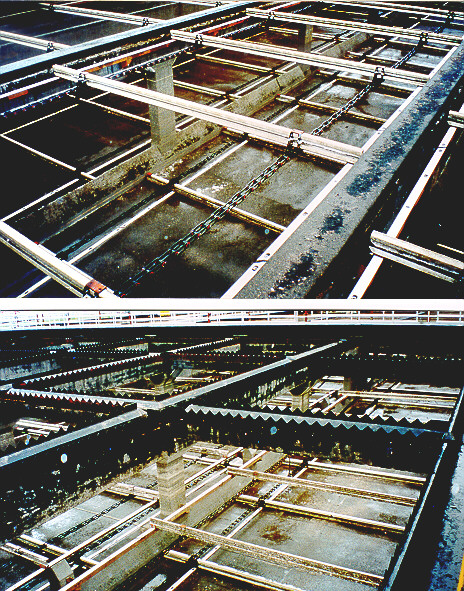
Primary Clarifiers These are the original primary clarifires, not presently in use. Top: Chain-driven scum and sediment collecting squeegees. Bottom: V-notch overflow weirs |
|
|
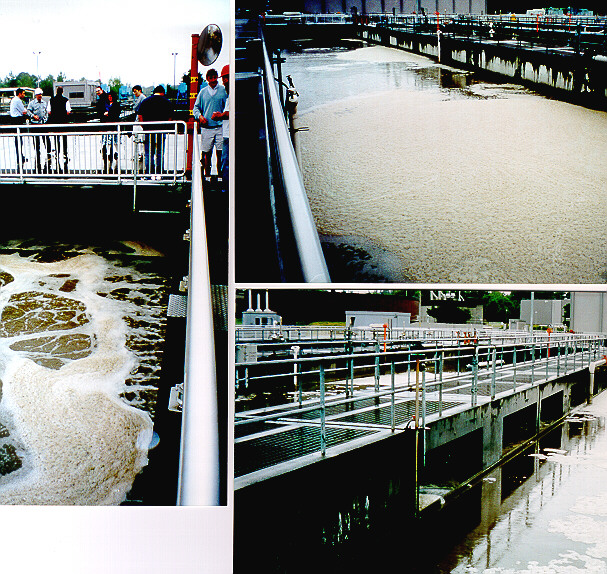
Secondary Aeration Basins Top, Left and Right: Aeration basins in operation. Lower Right: Basin with aerators temporaily shut down; shows walkway arrangement. |
|
|
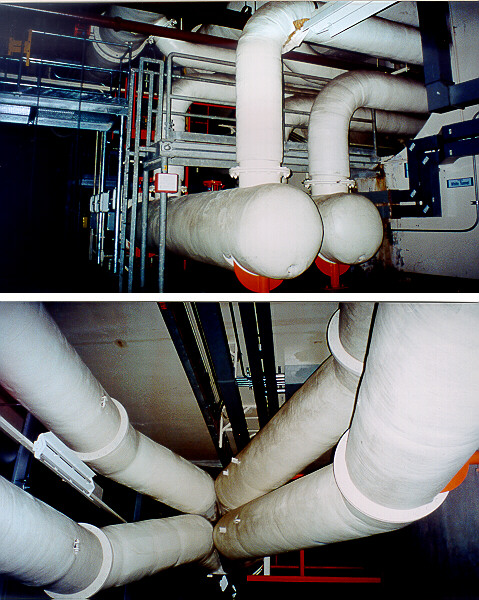
Air Supply for Aeration Basins Large (3-ft) diameter pipes cary air from blowers to aeration basins via a long pipe gallery below the basins. |
|
|
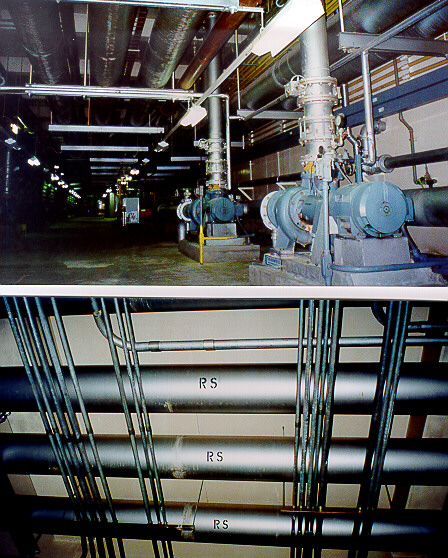
Sludge Return System Pipe gallery below basins showing the sludge pumps and return-sludge pipes that recycle activated sludege from the secondary clarifiers to the aeration basins. |
|
|
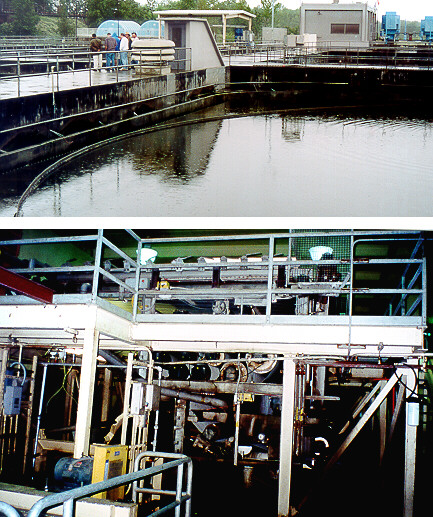
Secondary Sedimentation and Sludge Handling Top: Secondary clarifiers. Bottom: Belt-type sludge thickener. (Drum carry belts are visible as the white cylinders at the center of the apparatus). |

|
|
Anaerobic Sludge Digestion Top: Brick anaerobic sludge digester with floating cover. Bottom: Flare burning off excess methane from the digester. Some methane is also used to produce electricity in a pilot-study fuel cell (not shown). |

|
|
Final Chlorination Chlorinator system. Left-hand boxes have chemical monitors and controllers, red pipes in center carry samples to sensors, left most yellow pipe carries Cl gas down to the chlorinator (small black box at pipe junction), two yello pipes to the right carry concentrated HOCl solution upward to be mixed with the final effluent. |